You Say You Want Some Resolution

My very first digital camera was a Nikon Coolpix 950, purchased 13 years ago. It was a 2.1 megapixel camera, producing 1600 x 1200 pixel images. I really enjoyed using it, until one day I accidentally left it behind on a plane. And so the never-ending series of digital camera upgrades ensued. But that’s another story.

Today’s camera phones range up to around 8 megapixels. For example, the iPhone 4S produces images which are 3264 x 2448 pixels.

DSLRs provide, of course, even more resolution, with the latest 36 megapixel Nikon D800 clocking in at an impressive 7360 x 4912 pixels.

Clearly, today’s cameras are capable of producing digital images of much more than the 1024 x 768 pixels which is the current gold standard for “projected images” or “digital images” in competitions and salons.

That’s why our committee proposed last year that we would move to a new allowable maximum digital image size for our KCPS salons of 1600 x 1200 pixels. We thought it was time to move on, and this decision was endorsed when discussed at our AGM in November 2011.

It’s important to mention that this is a maximum allowable size (i.e., no more than 1600 pixels across, and no more than 1200 pixels high).  Less is OK as well. And this will also allow for more freedom in aspect ratio for cropped images, within those constraints.

Image resolution is important at four stages – capture, production, judging, and display:

  1. Capture – as noted above, there is no difficulty in capturing images of at least 1600 x 1200.
  2. Production – this will depend on the photographer’s computer display. Many monitors these days are tending towards the HD aspect ratio of 16:9 or 16:10.  Common resolutions now are 1920 x 1080, 1920 x 1200, and on up to the 27 inch iMac resolution of 2560 x 1440.
  3. Judging – again, this will depend on the judge’s computer display. But it is very likely that they will have good resolution displays.
  4. Display. For projection at the KCPS salons our own projector has a native resolution of 1200 by 800 pixels (WXGA). We did consider limiting images to this, but decided that it was time to “move on”, even if not all the detail in an image of (up to) 1600 x 1200 could be projected just now. Technology is advancing rapidly. For example, rumour has it that in early March Apple will announce their iPad 3 with a “retina” display resolution of 2048 x 1536.

So don’t forget that starting with our 2012 Summer Salon (images due by 12 March) you can submit digital images of up to 1600 pixels across, and up to 1200 pixels high. The process for submitting these images is about to change, but that’s also the topic for another post.

Finally, for more than you ever wanted to know about display resolution, check out the Wikipeda entry.

Wikipedia Display Resolution Graphic

Entries for NATEX 2012 Due Soon

This is a reminder that entries are now being accepted for the 2012 PSNZ Canon National Exhibition.

(As announced at our meeting last Monday, next year KCPS will be running this exhibition, in association with the Wellington Photographic Society who are holding the PSNZ National Convention in Wellington in 2013.)

Entry forms are available on the PSNZ website  or by contacting the NATEX Committee (email Ross Forrester).

The closing date for entries is Tuesday 28th February 2012

Accepted entries will be exhibited at the 2012 PSNZ National Convention, 25th – 29th April at the Ascot Park Hotel, Invercargill. Entry is open to persons residing in New Zealand and to members of the Society residing overseas.

There is a discounted entry fee for individual PSNZ members (just as there is a discounted registration fee for PSNZ members attending the convention).  A PSNZ membership application form is available if you would like to join and be eligible for these discounts.

First Meeting at OBC

(c) Colin McKenzie

(c) Mike Brewer

(c) Michelle Tingey

Our new venue at the Otaihanga Boating Club worked really well for the first meeting last Monday.

Thirty-five attendees (a near record) were treated to a Members Exhibition by Colin McKenzie, Mike Brewer and Michelle Tingey. They each explained their own interest in photography, illustrated with a series of impressive images (just one example from each is shown).

Michelle finished off with an audiovisual of “What Catches My Eye”.

It was a fantastic start to what’s going to be a great year for our Society.

2012 Programme

The most up-to-date information about upcoming activities will always be obtained from the Calendar of Events.

But since it can also be useful to have a one-pager with an overview of the year – here it is as a pdf file.

The first event is tonight – hope to see you there soon.

Monday, Monday – 13 February – First Meeting of 2012

Just look at that view from the deck of The Boat Shed at the Otaihanga Boating Club. That’s what we’ll be enjoying with the first meeting of the year – 7:30 pm on Monday.

Yes – MONDAY – we’ve changed our regular meeting night to Monday, not Tuesday. Don’t be a day late! (And you’re likely to be very lonely if you go to our previous venue at the church hall in Waikanae by mistake.)

The main event will be a Members Exhibition with three of our members informally sharing some of their images and interest in photography. We look forward to seeing you there.

Don’t forget that subscriptions for this year are due now – Ian Linning will happily take your money at the meeting, or you can use Internet Banking. Details of the bank account are on the new member application form on our Membership Page.

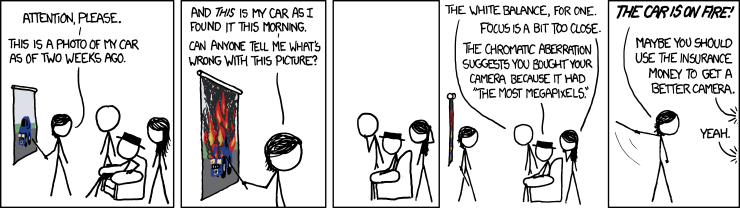
Finally, when considering images, don’t forget the importance of content. This cartoon hilariously makes the point, from one of my favourite web comic sites – xkcd.com.

Horowhenua Camera Club Exhibition – Shannon

Sandy Carter, President of the Horowhenua Camera Club, at their Exhibition Opening

Congratulations to the Horowhenua Camera Club, who are holding their first exhibition after being in operation for just on sixteen months.

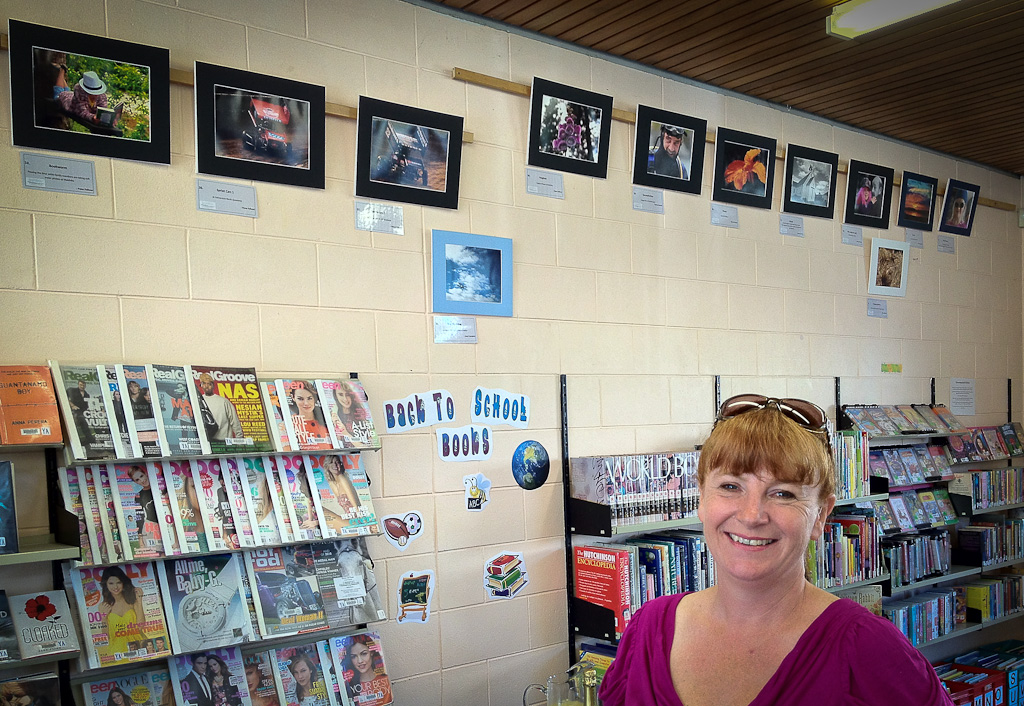
Shona and I went up for the exhibition opening this evening, in the Shannon Public Library. We enjoyed seeing the images and talking to the locals, including Sandy Carter.

Do drop in and have a look if you are visiting (I gather the shopping is great) or passing through Shannon – the exhibition is on for the next couple of months.

Adobe Lightroom 4 Beta

I started using Lightroom when its first version came out in beta in 2006, and it has been my main tool for organizing and processing my images ever since. Every new version provides a significant upgrade, with less need to drop out of Lightroom to Photoshop or other software packages to do something extra.

Adobe has now released a beta of the next version – Lightroom 4.   They provide a helpful set of videos with Julieanne Kost showing what’s new in this version.

I’m always most interested in what they do in the develop module,  so found this video of particular interest.  The 12 minute video covers:

  • The new 2012 process
  • The new develop module sliders for Highlights, Shadows, Whites and Blacks.  These are quite different to those used in Lightroom 3. By default they all start in the middle at zero; moving to the right brightens that part of the image, and to the left darkens it.
  • Automatic chromatic aberration correction
  • Local adjustments now include colour balance, so you can fix local colour casts
  • Local adjustments also include noise reduction, so you can fix brightened up shadow areas where local noise has appeared
  • Improvements to saving presets

You can get the Lightroom 4 beta from here if you want to have a play. Be aware that it is a 400 mbyte download, and as a beta you should just be exploring and not using it as the only means of managing your photos.  It’s free, but this Beta 1 will expire on 31 March.

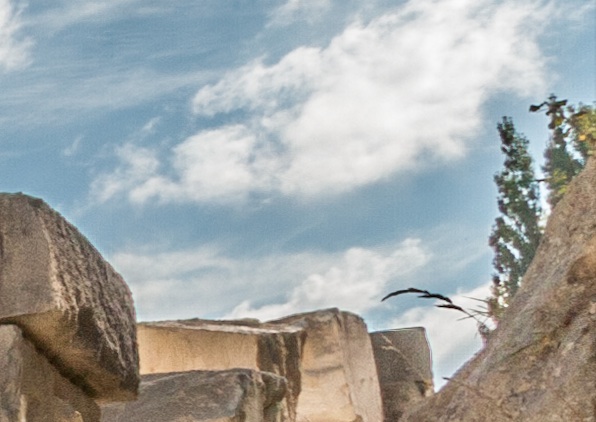
Finally, here’s just one example what Lightroom 4 Beta can do.  This is part of a random image of mine with bad chromatic aberration (the green and purple fringing) that was very well corrected, automatically.

Part of an image with bad chromatic aberration

Image after automatic chromatic aberration correction by Lightroom 4 Beta

Image after automatic chromatic aberration correction by Lightroom 4 Beta

PSNZ’s Most Wanted – Your Images

It’s well worth checking out Tony Bridge’s website including his blog.

In a recent post Tony asked people to send in digital images that could be used  as test images for people who have applied to become PSNZ accredited judges.  He needs at least 100 of them. They need not be award-winners – a variety is what is needed. As Tony put it, “They do not have to be your finest work.”

Check out the post for more details, and please contribute some images if you can.

Exhibition – Wildlife Photographer of the Year

This exhibition is on until 29 February at the Te Manawa Museum of Art, Science and History in Palmerston North.

Hugh Scott has been and reports:

It’s well worth a visit – some absolutely stunning images, in many cases with details of how they were taken. I visited it recently and was moved by their beauty and power and the skill of the photographers, some of whom had made their own equipment to make the shot possible. Give yourself a good hour to wander through it.

The cost is $7.50 for adults, $5.00 for pensioners and students.

There’s a gallery of small versions of some of the images in association with the UK Natural History Museum exhibition. Here’s just one that I’ve linked to.

Fellow Photographer’s Blog

Spoonbill in flight (c) Brian Harmer

Brian Harmer, a fellow photographer from the Hutt Camera Club, started up a new blog at the beginning of January where he posts daily thoughts and photographs.  Check it out – I recommend it.

This photograph is from Brian’s latest posting – an absolutely gorgeous shot of a white spoonbill in flight at the mouth of the Hutt River.